Your definitive guide to making smarter software investment decisions, powered by insights from Flynaut, a leading custom software development company and trusted technology partnership USA.
Introduction to the Build vs Buy Software Decision in 2026
The “build vs. buy” debate has been around for decades, but in 2026, it’s more complex than ever.
With the explosion of AI-integration services, no-code platforms, and cloud-native microservices, the line between building custom software development vs off the shelf solutions has blurred.
For CIOs, CTOs, and business leaders, the decision isn’t just technical anymore, it’s strategic. It affects agility, data ownership, scalability, and long-term cost structure across enterprise app development services.
So, how do you decide whether to build a custom application or buy an existing platform?
This in-depth guide breaks down the pros, cons, and 2026 realities, helping you make the right call with Flynaut’s proven expertise in digital transformation services USA, product engineering, and enterprise consulting.
The Modern Build vs Buy Dilemma: Why the Decision Has Changed
In the past, “build” meant hiring developers for months of coding, and “buy” meant licensing rigid enterprise software. Today, both paths have evolved as part of broader digital transformation agency USA initiatives.
- Custom development can now be faster thanks to frameworks, APIs, and AI-assisted coding
- Off-the-shelf tools have become smarter, modular, and easier to integrate with modern cloud infrastructure services USA
- Businesses operate in hybrid ecosystems, often combining both approaches under a single enterprise transformation consulting strategy
However, one truth remains: the right decision depends on your unique business model, scale, data sensitivity, and growth goals.
The “Build” Option: When Custom Software Development Wins
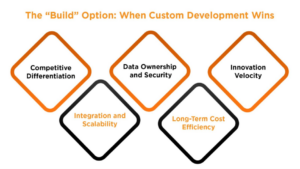
Building your own application means creating a tailored solution from the ground up (or heavily customizing an existing framework).
This path delivers maximum control and flexibility, but requires clear vision, resources, and the right custom software development company, like Flynaut.
1. Competitive Differentiation Through Custom Software Development
When your digital experience is a key differentiator, build is the smarter move.
Example:
A logistics company that develops its own AI-powered route optimization app gains a proprietary advantage, something an off-the-shelf system can’t replicate.
Key industries: Fintech, healthcare, logistics, SaaS startups, and marketplaces.
Why it matters in 2026:
As industries embrace AI, companies need unique data workflows and user experiences to stand out. Off-the-shelf tools can’t reflect your business DNA or support advanced business process automation solutions.
2. Integration and Scalability with Enterprise App Development Services
Custom-built apps allow you to integrate seamlessly with internal systems, APIs, and cloud services.
In contrast, off-the-shelf tools often force rigid integrations or manual workarounds.
Example:
A mid-size manufacturer builds a cloud-native ERP tailored to its multi-region supply chain instead of adapting a generic SaaS tool.
Flynaut’s edge:
We architect apps using microservices, RESTful APIs, and modular design, enabling long-term scalability, seamless data integration consulting, and future expansion.
3. Data Ownership and Security in Custom Software Platforms
Custom apps give you full control over data governance, privacy, and compliance, crucial in regulated sectors like finance and healthcare.
In a “buy” scenario, data may live on third-party servers, subject to vendor policies or lock-ins.
2026 update:
With evolving AI regulations and compliance frameworks, full ownership of your data model is now a strategic asset. Custom platforms allow compliance-by-design architectures supported by digital consulting services and secure cloud strategies.
4. Long-Term Cost Efficiency of Custom Software Development
Building may cost more upfront but can save significantly in the long run, especially if you avoid recurring licensing fees or costly workarounds.
Scenario:
An enterprise paying $300K/year in SaaS subscriptions builds a one-time custom platform with Flynaut that pays for itself in 2 years, and scales freely thereafter.
Rule of thumb:
If your product will evolve continuously, custom software becomes a compounding asset, not a sunk cost.
5. Innovation Velocity Enabled by Custom Software Development
Custom-built platforms allow you to move fast, experiment freely, and implement new features without waiting on vendor roadmaps.
For companies with strong R&D cultures, build = innovation speed.
Example:
A medtech firm partnering with Flynaut built a HIPAA-compliant AI patient portal in 6 months, faster than any commercial EMR vendor’s release cycle-leveraging advanced AI integration services.
The “Buy” Option: When Off-the-Shelf Software Makes More Sense
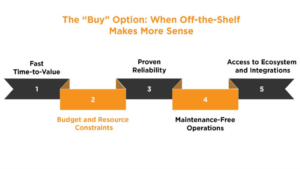
Buying pre-built software or subscribing to SaaS can be the right call under specific conditions, particularly when you need speed, simplicity, and low upfront cost.
1. Fast Time-to-Value with Off-the-Shelf Software
If you need to go live within weeks (not months), an off-the-shelf platform is the shortcut.
Modern SaaS tools offer out-of-the-box functionality that works from day one – ideal for proof-of-concepts or early growth stages.
Example:
A new startup chooses HubSpot or Salesforce to launch its CRM instead of building one internally.
2. Budget and Resource Constraints Favoring Off-the-Shelf Tools
For small to mid-sized organizations without in-house dev teams, buying SaaS avoids the complexity of software engineering, DevOps, and maintenance.
Key Benefit: Predictable subscription-based OPEX models, often supported by external managed IT services providers.
But beware:
Long-term dependency on vendor pricing and product roadmap can erode cost advantages over time.
3. Proven Reliability of Established SaaS Platforms
Established SaaS platforms have gone through years of testing, security audits, and user feedback.
For standard business functions (HR, payroll, project management), it’s safer and cheaper to buy than build.
2026 Note:
Top vendors now use AI-driven security and auto-scaling, reducing operational overhead. But they’re still black boxes, limiting customization and transparency.
4. Maintenance-Free Operations with Off-the-Shelf Software
Buying eliminates the need for internal updates, bug fixes, or patching.
However, this convenience comes with trade-offs:
- You depend on the vendor’s uptime and SLA.
- You can’t control release timelines or feature deprecations.
Example:
If your SaaS provider discontinues a feature critical to your workflow, you’re forced to adapt, or rebuild.
5. Access to Ecosystem and Integrations in SaaS Platforms
Off-the-shelf tools often plug easily into popular platforms (Google Workspace, Zapier, Slack, etc.) with minimal setup.
This makes “buy” an excellent fit for early-stage digital transformation, but risky for enterprises that demand bespoke scalability and deep integration.
2026 Reality: The Hybrid Build + Buy Software Model
In 2026, the smartest companies don’t choose sides, they blend both approaches.
This hybrid model uses:
- Bought tools for generic processes (HR, CRM, accounting).
- Custom-built platforms for proprietary workflows and innovation.
Example:
An e-commerce brand uses Shopify for storefront management (buy) but builds a custom analytics engine (build) for predictive customer insights.
Flynaut helps enterprises design hybrid tech stacks that balance speed with control, ensuring every dollar spent creates competitive advantage.
Build vs Buy Software Matrix for 2026 Enterprises
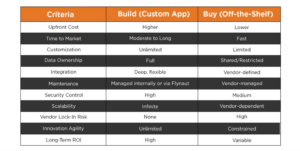
The Strategic Decision Framework for Build vs Buy Software
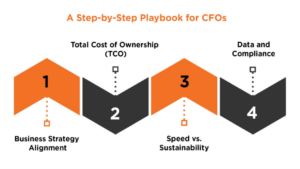
Flynaut recommends evaluating four key lenses before choosing between build or buy:
1. Business Strategy Alignment: Build vs Buy Software
Ask: Is this application core to our differentiation or simply operational support?
- If it’s strategic → Build
- If it’s commodity → Buy
2. Total Cost of Ownership (TCO) in Build vs Buy Decisions
Calculate not just licensing, but hidden costs, integration, customization, compliance, and scaling fees.
A 2026 survey by IDC shows 63% of enterprises underestimate SaaS customization costs by over 25%.
3. Speed vs Sustainability in Software Investment Decisions
Fast isn’t always better.
A quick win today can lead to technical debt tomorrow if you outgrow your SaaS provider.
4. Data Ownership and Compliance Considerations
Industries under HIPAA, SOC 2, or PCI DSS require total data control, something most off-the-shelf apps can’t guarantee.
Custom builds give you full auditability and compliance-by-design architecture.
How Flynaut Helps You Make (and Implement) the Right Choice
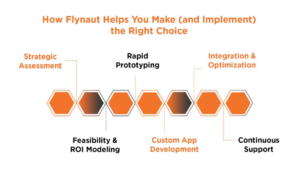
Flynaut doesn’t just build apps, we advise, design, and optimize your entire modernization journey.
Our Approach to Build vs Buy Software Strategy at Flynaut:
- Strategic Assessment
We analyze your business goals, workflows, and cost structure to recommend the right model, build, buy, or hybrid. Strategic assessment aligned with enterprise transformation consulting
- Feasibility & ROI Modeling
Using financial modeling, we compare 3-year and 5-year ROI scenarios for each option.
- Rapid Prototyping
Before you commit, Flynaut creates functional prototypes for validation with stakeholders.
- Custom App Development
When “build” wins, we design scalable, secure, and future-proof applications using the latest frameworks (React, Node.js, Flutter, Kubernetes, AWS, and Azure).
- Integration & Optimization
For hybrid setups, we connect off-the-shelf platforms with your custom components via APIs and automation, ensuring a unified ecosystem.
- Continuous Support
Flynaut offers long-term management, analytics, and optimization so your investment grows stronger over time.
As a long-term technology partnership USA, Flynaut ensures your software decisions deliver sustained competitive advantage.
Case Study: From Buying Software to Building Custom Platforms
Client: Healthcare SaaS Provider
Challenge: Outgrowing multiple off-the-shelf CRM and scheduling tools; high data costs and low flexibility.
Flynaut’s Solution:
- Built a custom patient engagement and workflow management platform.
- Integrated legacy APIs and third-party AI analytics.
- Delivered HIPAA-compliant architecture with real-time insights.
Results:
- $450K annual savings on SaaS licenses.
- 80% faster data reporting.
- 100% control over patient experience and data compliance.
Conclusion: Choosing Between Build vs Buy Software in 2026
In 2026, the build vs. buy software decision is no longer binary, it’s strategic.
Building custom software gives control, scalability, and innovation freedom. Buying off-the-shelf delivers speed, simplicity, and lower entry costs.
The smartest organizations use both, buying for efficiency, building for differentiation.
With Flynaut, you don’t just choose, you optimize. Our team helps you design a roadmap that maximizes ROI, ensures data sovereignty, and evolves with your business.
Whether you’re scaling, modernizing, or reimagining your digital ecosystem, Flynaut ensures you make the right investment at the right time.
Build Smart. Buy Wisely. Modernize with Flynaut
Turn your tech decisions into business advantage.
Partner with Flynaut, the #1 app development company in the U.S., to design, build, or optimize your next digital solution with confidence.